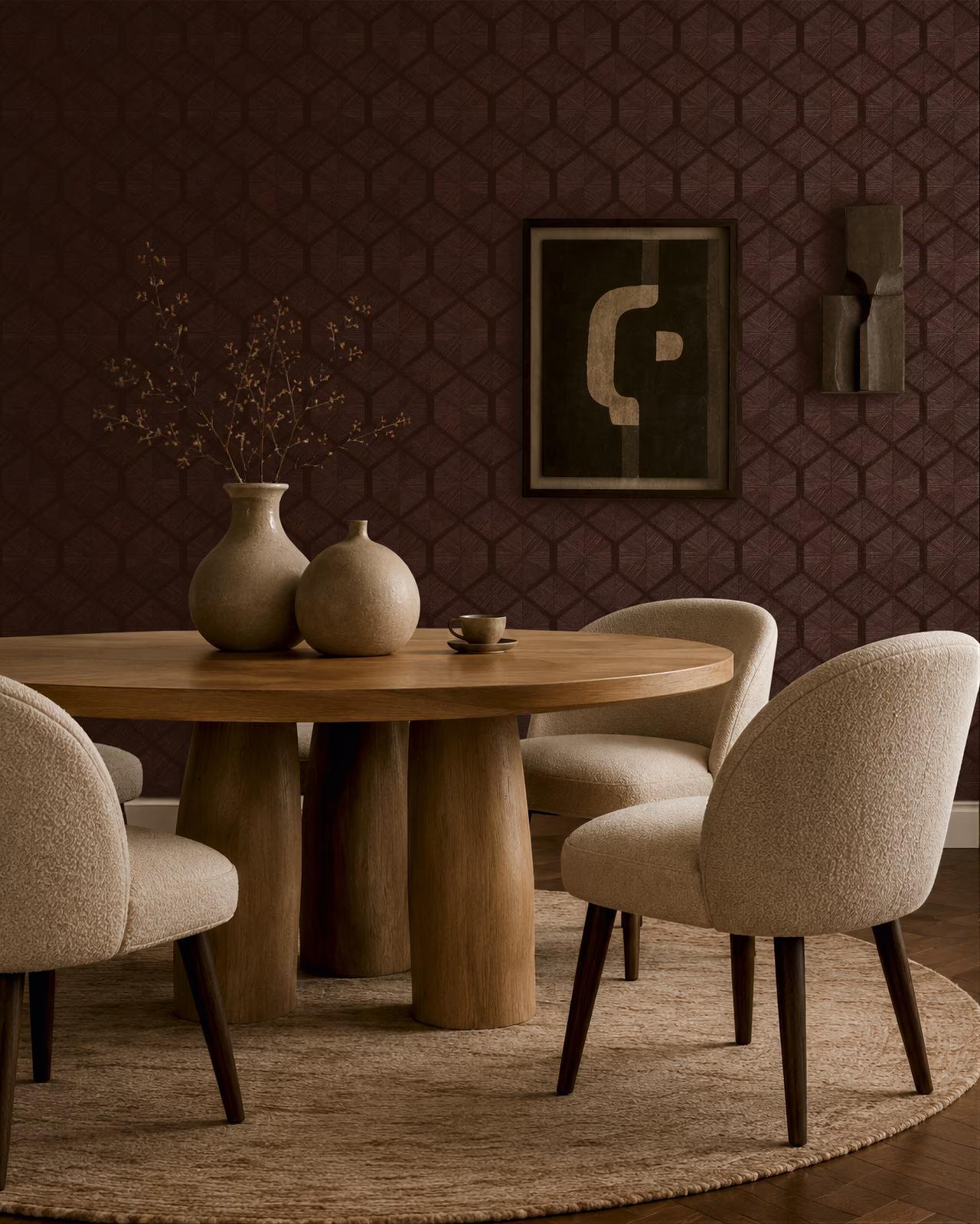
Type I or Type II, ASTM E84, Class A, low-VOC: what the labels on a commercial wallcovering actually mean. Plus what to ask for in hotels, restaurants, clinics and offices, and how to brief a supplier.
A guest room, a hotel corridor and a busy dining room can all wear beautiful walls, but they don't wear them the same way. Choosing hotel and restaurant wallcovering in Thailand means reading a spec sheet as well as a pattern book, and the spec sheet is where most people's eyes glaze over. Clinics, massage shops and offices face the same question with different pressures. Here is the vocabulary, plainly, plus what to ask for in each space and how to brief a supplier.
Why a commercial wall is a different job
A wall at home gets admired. A wall in a hotel gets bumped by luggage, brushed by housekeeping trolleys and wiped down every single day. A restaurant wall meets chair backs, kitchen steam and whatever the cleaning team uses at closing time.
That's why commercial wallpaper in Bangkok is specified differently from a living room. The pattern still matters — it's what guests photograph. But beneath it sit questions about durability, cleaning, fire testing and indoor air, each with its own slightly cryptic label.
The vocabulary, plainly
Type I and Type II: how much wear a wall can take
These grades come from W-101, the Wallcoverings Association standard for polymer-coated fabric wallcoverings (it replaced the older CFFA-W-101 in 2017). Think of the types as duty ratings.
- Type I is light duty: offices, hotel guest rooms, hospital patient rooms and other low-scuff areas.
- Type II is medium to heavy duty: foyers, lounges, corridors, classrooms, lift lobbies and anywhere with average-to-heavy scuffing.
A Type III exists for high-impact areas, though we supply Type I and Type II. The difference that really counts is tear strength. W-101 sets a minimum of 192 g for Type I and 800 g for Type II. Those are floors rather than any one product's figures, but the direction is clear: Type II is the grade for walls that meet luggage and trolleys.
The two meanings of "fabric-backed"
This phrase does two jobs, and only one of them belongs in a restaurant. In the trade, fabric-backed means a vinyl face laid on a fabric backing, the durable W-101 kind this article is about.
Elsewhere, the same words often describe textile-faced wallcoverings such as grasscloth, silk or linen. Those are lovely and delicate. They are not what you want beside a buffet station, so always check which meaning your supplier has in mind.
ASTM E84 and Class A
ASTM E84, often called the tunnel test, is a US test that measures how fast flame travels along a surface (the Flame Spread Index) and how much smoke it gives off (the Smoke Developed Index). For reference, cement board scores 0 and red oak scores 100.
The results sort into classes. Class A means a flame spread of 0–25, Class B 26–75 and Class C 76–200, with smoke of 450 or less for all three. A Class A rating means a material resists flame spread. It doesn't mean it can't burn.
The rating belongs to a specific product, and sometimes to how it was tested and adhered, so always ask for the certificate for the exact product on your schedule. Class A options are available, with the certificate supplied per product.
Washable or scrubbable?
Washable means the surface can be wiped with a damp cloth and mild soap. Scrubbable means it can take a soft brush and cleaning solution, repeatedly.
Under W-101, every type must reach 100 washability cycles, so washability won't separate one grade from another. Scrubbability does: 200 cycles for Type I and 300 for Type II. One honest caveat: W-101 has no abrasion test, so treat any promise of a "scratch-proof" wall with polite scepticism.
Low-VOC and antimicrobial
VOCs are volatile organic compounds, the chemicals behind that new-room smell. Low-VOC wallcoverings release less of them, which matters most in clinics and anywhere people spend long hours indoors.
Len-Tex, the US maker of our main fabric-backed commercial vinyl, says its wallcoverings meet CA 01350 and CHPS and are SCS Indoor Advantage Gold certified for indoor-air emissions, and that its low-VOC range uses phthalate-free Clean Vinyl Technology. Len-Tex also builds Ultra-Fresh antimicrobial protection into all its wallcoverings, to help against mould and mildew. That's a useful extra, not a guarantee: a dry wall still matters most.
What to ask for, space by space
Hotel rooms and corridors
Guest rooms are classic Type I territory, with low scuff and gentle use. Corridors and lift lobbies are where Type II earns its keep, because that's where trolleys and luggage meet the wall at speed.
Len-Tex says its Aqua-Clear topcoat is low-VOC and water-based, impervious to alcohol and alkaline cleaners, and that it "exceeds federal guidelines for scrubability ten-fold". Len-Tex also offers a five-year limited warranty on its commercial wallcoverings.
Restaurants
Dining rooms take chair backs, shoulders and the odd enthusiastic toddler, so brief them as average-to-heavy scuffing areas. Near the kitchen, tell your supplier about grease, steam and the cleaning chemicals used, and choose a scrubbable vinyl face rather than anything textile. A quieter private dining room can carry something more decorative where the spec allows.
Clinics and massage shops
Here the priorities are indoor air and cleaning. Ask for low-VOC certifications, and tell your supplier about hand sanitiser and disinfectants, since the walls will meet both daily. It helps to know that W-101 lists hospital patient rooms under Type I.
Humidity deserves a line in the brief too. A vinyl face doesn't breathe, so the wall behind it must be properly dry before anything goes up. For humid climates Len-Tex recommends a micro-vented (permeable) wallcovering, available on request, though nothing replaces good preparation. Our guide to wallpaper and Bangkok humidity explains why.
Offices
Most office walls sit comfortably in Type I. Receptions and meeting rooms are where a brand gets to show some personality.
The Cosiness collection by AS Création, printed in Germany, has 74 designs, from palms and pressed leaves to woven rattan and plaster and linen plains. Every design is non-woven, pre-pasted, scrubbable or extra-washable, and strippable dry in whole lengths. It's a decorative non-woven rather than a W-101 vinyl, so use it for feature walls where the spec allows, not for the corridor.
How to brief a supplier
Keep the brief short but specific. It should cover:
- A room schedule: which walls, rough areas and the traffic level in each space.
- What the walls face: trolleys, luggage, chair backs, kitchen grease and steam, hand sanitiser, and the cleaning chemicals in use.
- The fire requirement for each space, plus a request for the certificate for each product.
- Any indoor-air requirements, for clinics and childcare in particular.
- The substrate and its moisture: air-conditioning condensation and damp walls change the preparation.
- Spare rolls from the same production batch, known as attic stock, for future repairs. Trade specs commonly ask for around 5%, so put it on the order.
- Samples to site or a sample board for sign-off, along with lead times for order-in stock and your programme dates.
On fire, one important note. What your building actually requires is a question for your fire consultant, architect or the building's management, and we'll supply the certificate to answer it.
How we handle a commercial job
Our projects page sets out the five steps. You send the brief: drawings, a mood board or a photo, plus your programme. We propose houses and finishes, send samples to site and confirm the technical spec with your designer.
Our team then measures the site, and you receive one itemised quote covering product, delivery, installation and lead time, with the manufacturer's certificates supplied alongside it. Finally our own crews supply and fit, finishing with a walkthrough. Our installation team covers Bangkok, Nonthaburi, Pathum Thani and Samut Prakan, and we supply across Thailand with VAT invoicing in your company's name.
Designers and architects will find the technical detail in the specifiers section of our trade page. Beyond the vinyl, we curate international houses such as Versace, Morris & Co. and Ashley Wilde, and print bespoke wallpaper murals on Canon Colorado UVgel, GREENGUARD Gold certified and low odour. We've delivered for Khaolak Merlin Resort and Phuket Marriott Resort & Spa, Merlin Beach.
Shall we look at your walls?
A drawing, a room count and a date is enough to start, and we reply within one business day. If you'd rather talk it through first, a design consultation is always free.
When you're ready, send us your brief. We'd love to see what you're building.
Good to know
Common questions
What is Type II wallcovering?
Type II is the medium-to-heavy duty grade in the W-101 standard for fabric-backed vinyl, meant for foyers, corridors, lounges and lift lobbies. Its main advantage over Type I is tear strength, with a minimum of 800 g against 192 g.
Is vinyl wallpaper fire-rated?
Not automatically. A fire rating such as ASTM E84 Class A belongs to a specific product, so ask for the certificate for the exact wallcovering you are ordering. Class A options are available, with the certificate supplied per product.
Can you wallpaper a restaurant near the kitchen?
Yes, if the brief is honest about grease, steam and the cleaning chemicals used. Choose a scrubbable vinyl face rather than a textile one such as grasscloth or silk, and check your building's fire requirements with your consultant.
What wallpaper is best for a clinic?
Look for a fabric-backed vinyl with low-VOC certifications and a finish that copes with hand sanitiser and disinfectants. Antimicrobial protection is a helpful extra in humid conditions, but a dry, well-prepared wall matters more.
Is wallpaper suitable for a hotel corridor?
Yes, as long as it is graded for the job. Corridors take trolleys and luggage every day, so the W-101 standard places them in Type II, the medium-to-heavy duty grade.